
Choosing a trading platform involves more than checking its features, interface, or advertised charges. Before using any financial service, it is important to understand how transactions work, how account records are maintained, and whether the service is authorised.
Many people search for a dabba trading app, dabba trading software, and online dabba trading in India to understand how these platforms operate. However, dabba trading is an illegal off-exchange activity in India and does not offer the normal protections associated with authorised stock exchange transactions.
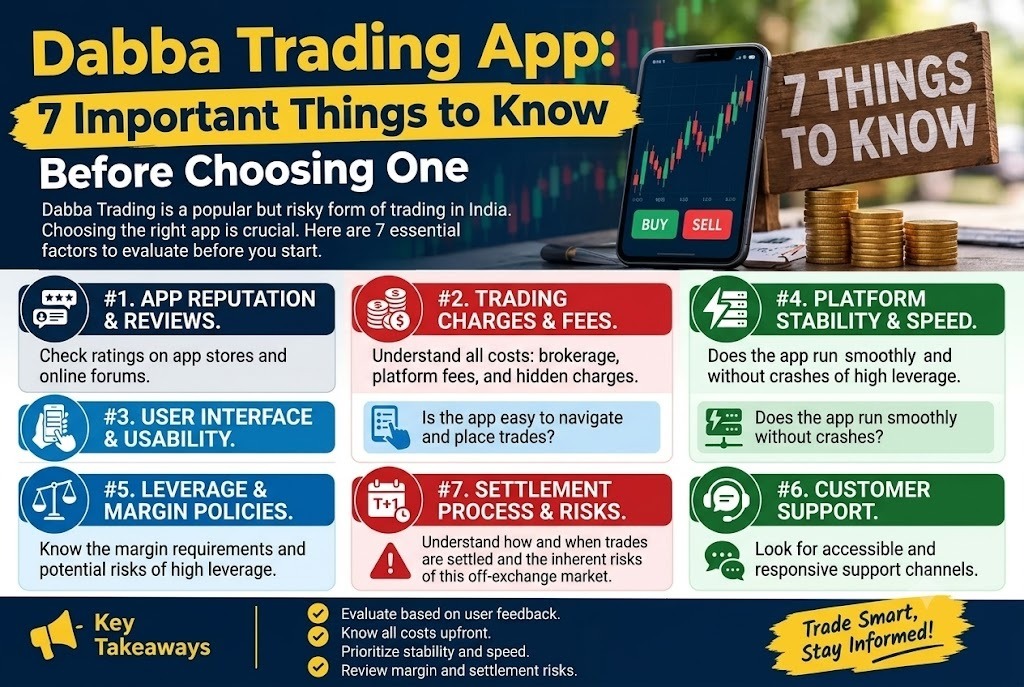
Understanding the difference between a dabba trading platform and a legitimate trading application can help users make informed decisions. This guide covers seven important factors, including market information, account records, app security, charges, and customer support.
What Is Dabba Trading App?
A dabba trading app is an application or interface associated with an off-exchange trading arrangement. It may display market prices, provide an account dashboard, or show transactions recorded internally by an operator.
Unlike authorised stock market trading, dabba trading involves transactions recorded outside recognised stock exchange systems. An operator may calculate a customer’s profit or loss based on market price movements without executing the corresponding trade through the exchange.
For example, an application may display Nifty or commodity prices, but that does not prove that a customer’s order has been executed on a recognised exchange.
Dabba trading is illegal in India. Anyone researching a dabba trading app should understand its legal and financial risks before transferring money or sharing personal information.
1. Check Available Market Segments
Market coverage is often one of the first things people consider when researching trading applications. Depending on the service, advertisements may mention Nifty, Bank Nifty, Indian equities, MCX commodities, or Futures and Options (F&O).
However, a list of available markets does not prove that a platform is authorised to offer trading in those instruments.
Before choosing a legitimate trading service, verify the company operating it and check its registration through official regulatory and stock exchange resources. Also confirm whether the intermediary is permitted to provide the specific service you intend to use.
It is important to distinguish between viewing market information and placing an order through a recognised exchange.
People searching for dabba trading in India should not assume that a platform is legitimate simply because it displays familiar market names. Always verify the service provider before opening an account or transferring funds.
2. Understand Market Data and Updates
Clear and timely market information can help users understand price movements. However, an application that loads quickly does not automatically provide an authorised or reliable trading service.
When evaluating a legitimate trading app, check whether prices are clearly displayed and whether the platform explains if the data is live, delayed, or indicative.
Consider the following questions:
- Are market prices easy to understand?
- Is the information updated according to the stated data service?
- Can users find relevant market information easily?
- Are limitations in the displayed data explained?
- Can transactions be verified through official records?
These checks help users understand what an application actually offers.
A dabba trading app may display prices similar to those available on recognised market platforms. However, the displayed prices do not confirm that customer orders are being executed through a recognised exchange.
When comparing trading software, focus on transparency, the identity of the operator, and the legitimacy of the underlying service rather than relying only on speed or design.
3. Review Watchlist and Research Features
A watchlist allows users to organise the securities or instruments they want to monitor. Depending on the legitimate trading application, users may be able to search for instruments, create personalised lists, and review market information in one place.
Common features include searchable instrument lists, organised market categories, price displays, and access to relevant company or market information.
These tools can make it easier to follow selected securities without repeatedly searching for them.
However, a watchlist is an information feature, not proof of authorised trading access. Displaying Nifty, Bank Nifty, or commodity prices does not establish that a platform is permitted to execute transactions in those markets.
People searching for the best dabba trading platform in India should understand this difference before evaluating an application’s features.
Instead of relying on promotional claims, verify the operator’s regulatory status and determine whether the service provides authorised access to the relevant market.
4. Check Account Records and Transaction History
Account records help users understand their financial activity and identify possible discrepancies.
When evaluating an authorised broker, check how you can access your holdings, order history, transaction statements, and official trade confirmations. Depending on the account, you may also be able to review open positions, average prices, realised gains or losses, and applicable charges.
Official transaction records are important because they provide evidence of trading activity and help users maintain an accurate financial history.
Dabba trading arrangements may instead rely on internal ledgers or records maintained by the operator. These records are not equivalent to official exchange transaction records.
If a dispute arises over a balance, order, or settlement, the absence of recognised exchange execution can make the situation more difficult to resolve.
Before opening an account with a legitimate trading service, understand how statements are generated, where transaction records can be accessed, and how discrepancies can be reported.
Keeping copies of official statements and transaction confirmations is also a useful financial practice.
5. Evaluate App Security and Mobile Access
Many people prefer mobile applications because they can access financial information from their phones. Others prefer browser-based platforms for reviewing detailed statements and account records.
When evaluating a legitimate trading application, consider its security features, ease of use, and compatibility with your devices.
Important factors include secure login, appropriate authentication, account recovery procedures, privacy information, and clear instructions for reporting suspicious activity.
People searching for a dabba trading app for Android or a dabba trading APK should be especially careful when downloading files from unknown websites.
An unverified APK may contain harmful software or expose passwords, banking details, and other personal information. Avoid sharing OTPs, passwords, or remote-access permissions with unknown operators.
A mobile-friendly interface does not establish regulatory authorisation. Always verify the company behind an application before sharing personal information or making payments.
6. Understand Trading Charges and Payment Procedures
Trading costs can affect the overall financial outcome of a transaction. However, advertisements offering zero brokerage, low charges, or quick settlements should not be accepted without checking the details.
Authorised brokers may charge brokerage, exchange transaction charges, applicable taxes, statutory levies, and other disclosed fees. The total cost depends on the instrument, transaction type, and broker’s published tariff.
Before opening an account, read the complete fee schedule and understand how charges are calculated.
You should also know which payment methods are officially supported, how funds are transferred, and how withdrawals and account balances are documented.
Some dabba trading operators advertise lower charges than conventional brokers. However, low advertised fees do not establish that a service is legitimate or that deposited money can be recovered in a dispute.
Avoid transferring money to unverified operators or unrelated personal accounts. Be cautious of guaranteed-profit claims and requests for additional payments to release funds.
When comparing legitimate trading services, transparent charges and verifiable records matter more than promotional offers.
7. Verify Customer Support and Complaint Procedures
Customer support can help users understand account information, resolve technical issues, and report suspicious transactions. However, the presence of a WhatsApp number, phone number, or live chat does not prove that a trading service is trustworthy.
Before selecting an authorised financial service, check whether its official website provides verifiable contact information and a clear complaint procedure.
You should understand how to report an incorrect transaction, question an account discrepancy, or escalate a complaint if the issue remains unresolved.
For eligible securities-market grievances, investors may be able to approach the relevant stock exchange or use SEBI’s official complaint mechanisms.
Dabba trading transactions conducted outside recognised exchanges do not receive the normal exchange-based investor grievance protections. This can make disputes and fund recovery more difficult.
If you find a dabba trading contact number online, independently verify the business instead of relying only on information supplied by the operator.
Reliable customer support is useful, but it cannot replace proper authorisation, transparent transactions, and official records.
How to Verify a Legitimate Trading Platform in India
People interested in online trading should prioritise verification over promotional claims. Before opening an account, follow these basic checks:
- Verify registration: Check the intermediary’s details through SEBI and the relevant recognised stock exchange.
- Understand the service: Confirm whether the platform provides market information, securities trading, commodity trading, or another financial service.
- Review charges: Read the complete fee schedule, including applicable taxes and additional costs.
- Check account security: Understand the available authentication features, privacy practices, and account recovery procedures.
- Review transaction records: Confirm how official statements, contract notes, and order records are provided.
- Understand financial risks: Stock market investments and derivatives can result in losses. Leverage may increase those losses.
These checks are useful whether you are researching trading platforms in Nagpur, Delhi, Gujarat, Hyderabad, Kolkata, Maharashtra, Pune, or elsewhere in India. A local contact or website does not automatically establish that a service is authorised.
Final Thoughts
Choosing a financial platform involves more than comparing its interface, market coverage, or advertised charges. Users should understand who operates the service, how transactions are executed, and what protections are available.
Although dabba trading apps and software may be promoted as convenient ways to follow market movements, their features do not establish legitimacy. Dabba trading is illegal in India and lacks the normal exchange-based protections associated with authorised trading.
Anyone exploring online trading in India should verify the intermediary, understand the costs, review official transaction records, and assess the risks before making a financial decision.
Frequently Asked Questions About Dabba Trading Apps
What Is Dabba Trading?
Dabba trading is an illegal off-exchange trading activity in which transactions are recorded internally by an operator instead of being executed through a recognised stock exchange. A dabba trading app or dabba trading software may track these transactions, but it does not provide the same protections as authorised online trading in India.
Is dabba trading legal in India?
No. Dabba trading is illegal in India. People interested in financial markets should use authorised services and verify registration details through official regulatory resources.
What is the difference between dabba trading software and a regular trading app?
The main difference is how transactions are handled. Authorised trading apps facilitate transactions through regulated market infrastructure, whereas dabba trading software may record customer positions internally outside recognised exchanges.
Are dabba trading charges lower than regular brokerage fees?
Some operators advertise lower charges, but these claims do not prove that a service is legitimate or safe. Compare the published charges of authorised brokers and consider their regulatory status, transaction records, and complaint procedures.
Is a dabba trading app APK safe to download?
An APK from an unknown source may expose your device and personal information to security risks. Installing an application does not make its underlying activity authorised. Use verified applications associated with legitimate financial service providers.
How can I verify a trading broker in India?
Check the broker’s registration and membership details through SEBI and the relevant recognised stock exchange. Make sure the legal entity and contact details match official records before opening an account or transferring funds.
What should I do if a dabba trading operator refuses to return my money?
Keep payment receipts, messages, screenshots, and other relevant records. Contact your bank or payment provider promptly if fraud is suspected, and seek guidance from the appropriate authorities or a qualified legal professional. Do not pay additional fees based on promises of guaranteed recovery.
Is intraday trading different from dabba trading?
Yes. Authorised intraday trading involves buying and selling eligible instruments through recognised market infrastructure, subject to applicable rules. Dabba trading involves off-exchange arrangements. Intraday trading still carries financial risks and does not guarantee profits.